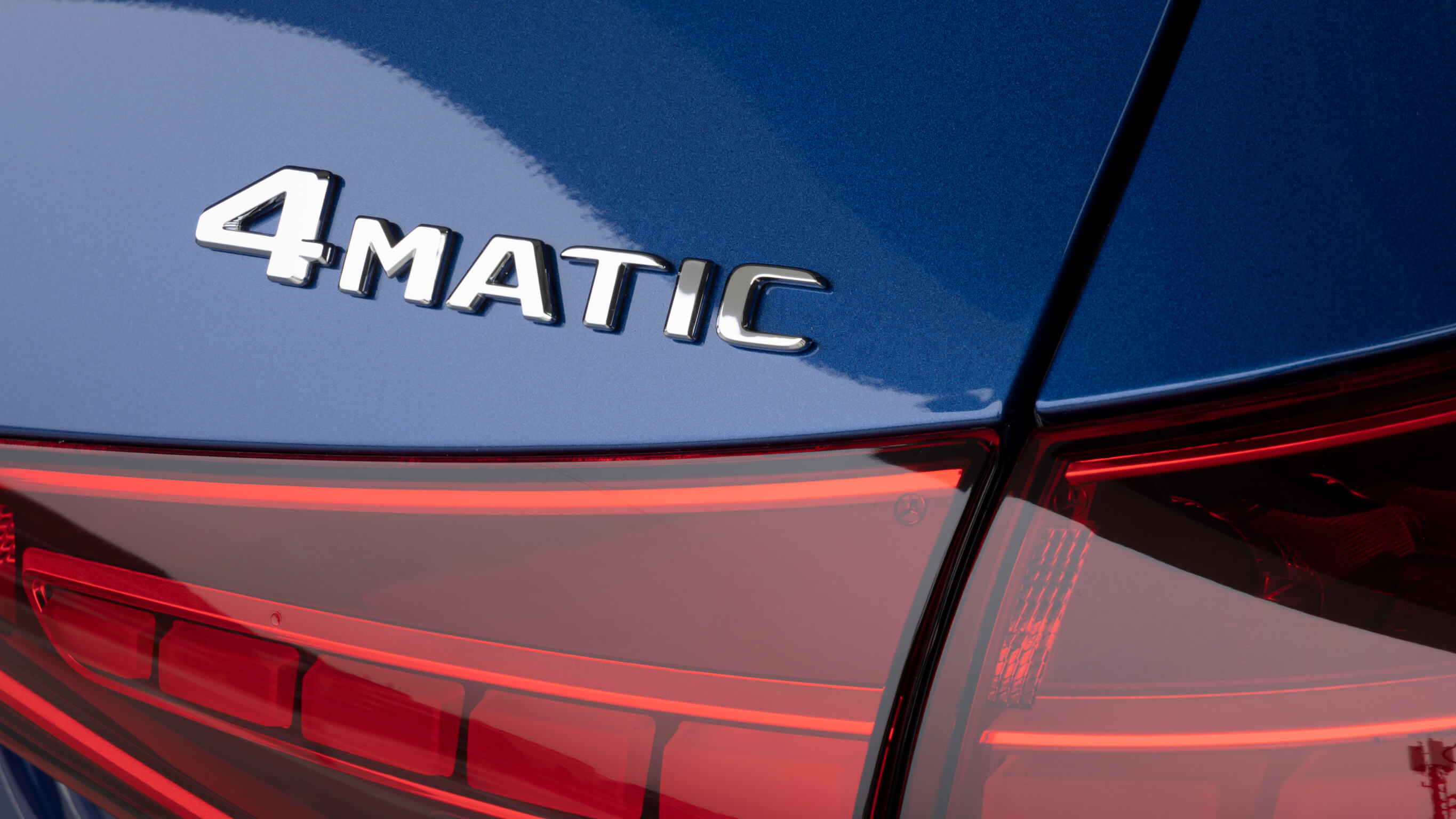
;Resize=(828,829) "Mercedes-Benz 4MATIC badge")
You’ve probably seen the ‘4MATIC’ badge on the tailgate of a Mercedes-Benz, but for many drivers it remains a mystery. Is it just branding? Does it make a real difference to the driving experience?
4MATIC is a highly advanced all-wheel-drive system that’s designed to improve safety and performance on the road. Simply put, when driving conditions demand extra grip or versatility, it gives you more confidence and control behind the wheel.
Understanding what the 4MATIC system is and how it works isn’t just for driving enthusiasts; it can help you choose the right drivetrain for your lifestyle, especially as models like the new Mercedes-Benz CLA 220 4MATIC arrive with more advanced tech than ever.
What does 4MATIC mean?
At its core, 4MATIC is an active all-wheel-drive system. First introduced in the 1980s, it has evolved into a sophisticated setup that can automatically (and imperceptibly) distribute power between the front and rear wheels to ensure the best possible traction, stability and safety in any driving situation.
In vehicles like the CLA 220 4MATIC, the system works seamlessly in the background, constantly adjusting torque to suit road conditions – whether that’s a rain-soaked highway, a muddy driveway or a loose gravel road.
How 4MATIC works
Unlike older mechanical systems, modern 4MATIC setups are electronically controlled. Sensors continuously monitor wheel speed, steering input and road conditions, then adjust torque distribution between the wheels. This allows the system to direct power where it’s needed most, improving traction and stability in changing conditions.
The system also works alongside the car’s suspension, braking system, and Dynamic Select drive modes to determine a proportionate response to any situation and maximise control without driver input. While it isn’t a safety system in the traditional sense, it does enhance stability and traction across a wide range of situations, from stationary take-offs and low-speed manoeuvres to high-speed cornering.
4MATIC is a highly advanced all-wheel-drive system that’s designed to improve safety and performance on the road. Simply put, when driving conditions demand extra grip or versatility, it gives you more confidence and control behind the wheel.
Understanding what the 4MATIC system is and how it works isn’t just for driving enthusiasts; it can help you choose the right drivetrain for your lifestyle, especially as models like the new Mercedes-Benz CLA 220 4MATIC arrive with more advanced tech than ever.
What does 4MATIC mean?
At its core, 4MATIC is an active all-wheel-drive system. First introduced in the 1980s, it has evolved into a sophisticated setup that can automatically (and imperceptibly) distribute power between the front and rear wheels to ensure the best possible traction, stability and safety in any driving situation.
In vehicles like the CLA 220 4MATIC, the system works seamlessly in the background, constantly adjusting torque to suit road conditions – whether that’s a rain-soaked highway, a muddy driveway or a loose gravel road.
How 4MATIC works
Unlike older mechanical systems, modern 4MATIC setups are electronically controlled. Sensors continuously monitor wheel speed, steering input and road conditions, then adjust torque distribution between the wheels. This allows the system to direct power where it’s needed most, improving traction and stability in changing conditions.
The system also works alongside the car’s suspension, braking system, and Dynamic Select drive modes to determine a proportionate response to any situation and maximise control without driver input. While it isn’t a safety system in the traditional sense, it does enhance stability and traction across a wide range of situations, from stationary take-offs and low-speed manoeuvres to high-speed cornering.