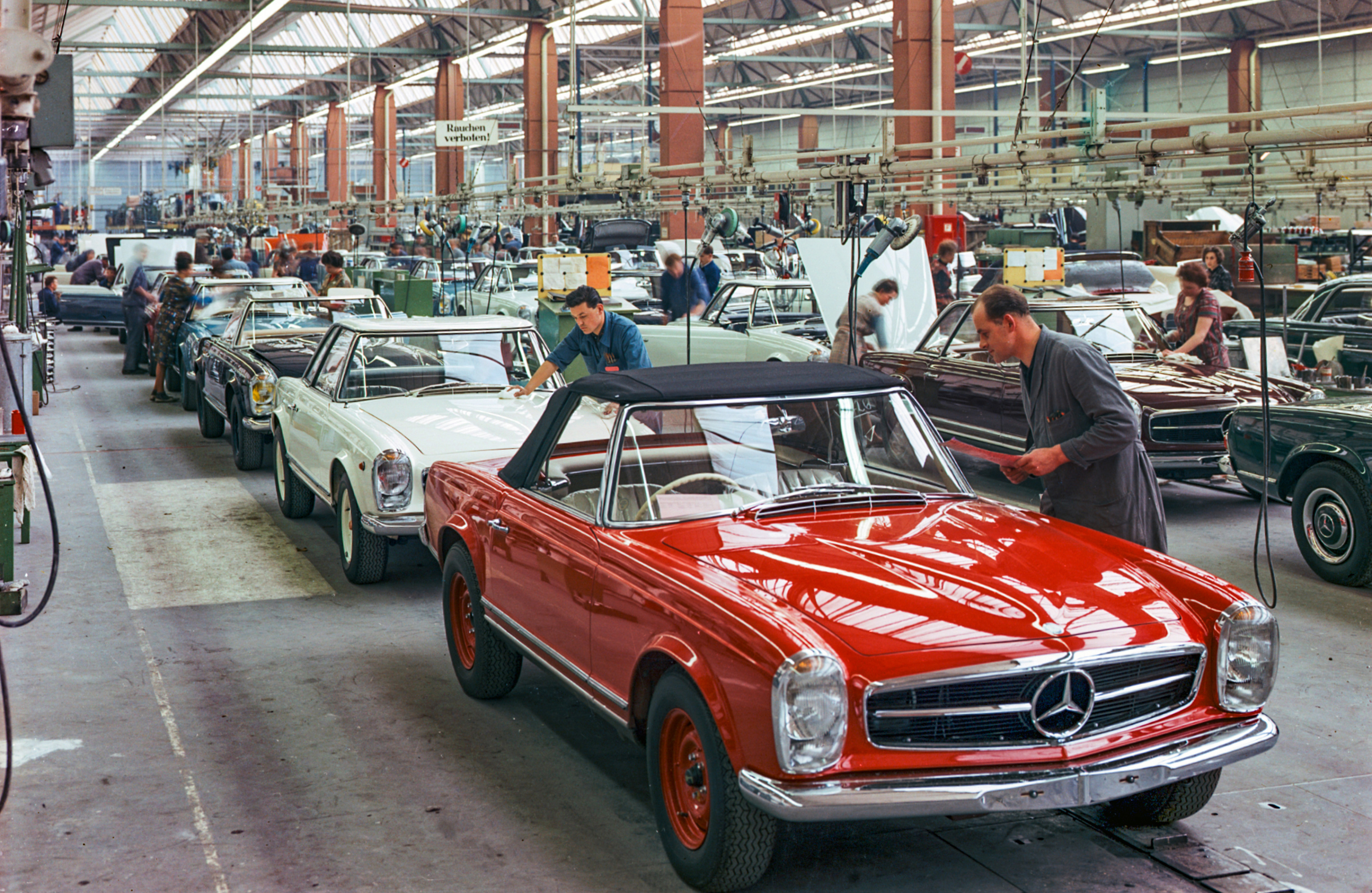
;Resize=(828,827) "Mercedes-Benz 230 SL ‘Pagoda'")
In March 1963, the new Mercedes-Benz 230 SL was presented for the first time at the Geneva Motor Show. The compact two-seater replaced two roadster models in one go: the comfortable 190 SL and the sporty 300 SL.
The concept worked – dynamic driving characteristics combined with a smooth-running six-cylinder engine and luxurious comfort featured in the 230 SL. The power steering, four-speed automatic transmission and remarkably easy-to-use soft-top were particularly popular.
Designed under the direction of Friedrich Geiger, the 230 SL impressed as a comfortable, high-performing touring car. It combined clean lines with the classic SL look, including a large central star in the radiator grille.
The removable hardtop, designed by Paul Bracq, made the car suitable year-round. It also gave this series its ‘Pagoda’ nickname: its tall windows and inwardly curved shape brought Asian temple buildings to mind. Not only did this innovative design feature make it easier to get in and out of the vehicle, it also offered greater roof strength and thus safety.
Following its world premiere at the Geneva Motor Show in 1963, the ‘Pagoda’ was presented to the public for the first time at the International Motor Show (IAA) in Germany in September of the same year.
Sports car with safety technology
Safety has always been a top priority for Mercedes-Benz, and the 1960s were no different. The safety level of the ‘Pagoda’ was ground-breaking for sports cars of the time.
The new SL was based on the shortened and reinforced chassis of the ‘Fintail’ passenger cars; it had a similar safety body with a rigid passenger cell and deformable crumple zones at the front and rear to absorb impact energy.
There were also many other safety features such as the softened interior and the bent steering column. For the first time, a Mercedes-Benz passenger car had modern radial tyres beneath it. Disc brakes at the front – later on all four wheels – guaranteed the best possible deceleration.