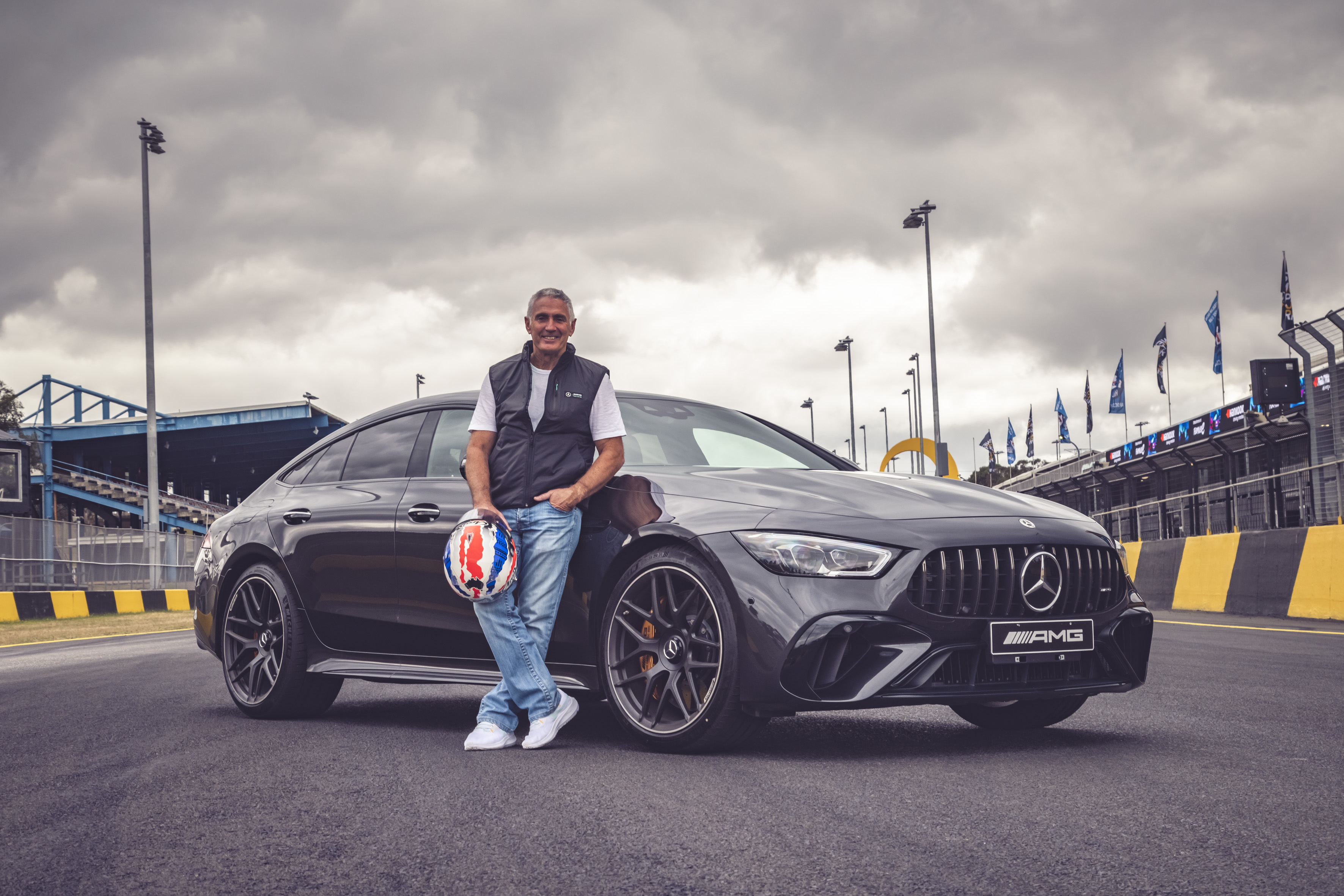
The word 'legend' is often overused – and yet sometimes, it’s barely adequate. 


Everyone who ascends to the motorcycle Grand Prix (MotoGP) ranks is a rider of uncommon skill and bravery. But in the mid-to-late 1990s, Mick Doohan was in a class of his own, becoming one of the sport’s all-time greats.


The man, the myth, the legend


Mick’s story starts in Queensland on June 4, 1965. The youngest of three boys, he followed in the tyre tracks of his two older brothers, hopping on his first motorised bike at the age of eight – something that helped him develop the unique riding style that would later characterise his career.


After transitioning to road racing at age 19, Mick’s rise through the ranks was as fast as the large-capacity motorcycles he was riding.


He initially competed in the Australian Superbike Championship before making the international stage in 1988 at the age of 23. He took part in four World Superbike Championship races that year – two in Japan at Sugo and two at home at Oran Park – and won three of them.


A year later, he joined the top category of motorcycle racing and immediately made an impact, claiming his first podium in only his sixth race. In his second season, he secured five podium finishes, his maiden victory, and third place in the championship. By year three, he had three wins, podiums in 14 out of 15 races, and finished second in the title race.


Down but not out 


The 1992 MotoGP season belonged to Mick – five wins and two seconds in the first seven races gave him a dominant 53-point lead. The title was a formality. Then came Assen. 


A crash in practice broke Mick’s right leg, and botched treatment led to a severe infection. MotoGP’s official doctor flew Mick – and fellow MotoGP star Kevin Schwantz, who had also been hospitalised that weekend – to Bologna, Italy, where the Australian faced the very real possibility of losing his leg. 


Drastic intervention was required, including hyperbaric treatment to revive his internal organs, and sewing his legs together to allow the left leg’s blood supply to keep the right one alive. Incredibly, it worked. Even more incredibly, Mick was back on the grid for the Brazilian Grand Prix just eight weeks after his accident.


Despite having no feeling in his right leg from the knee down, Mick managed 12th in Brazil – but in a cruel twist of fate, MotoGP only awarded points up to 10th (rather than 15th) that year. In any other year, Mick’s 12th place in Brazil would have netted him four points, and he would’ve been champion. Instead, he lost the 1992 title by four points.

A new racing style


The early part of the 1993 season would be heavily compromised by the limitations of his right leg, but an idea in the third race transformed Mick’s fortunes. 


“I used a lot of rear brake on the 500[cc bike], but I couldn’t do that anymore because I didn’t have any movement in my ankle,” he told MotorSport magazine.


So Mick switched to a thumb-operated rear brake, and within two races, was back on the podium, claiming his first victory since the accident a few races later at Mugello – until another crash at Laguna Seca broke a shoulder and ended his season. 


Mick received further treatment for his leg after that, with surgeon Kevin Louie marvelling at his resistance to pain - call it "almost superhuman".


With his leg improving and the new braking system, Mick could finally begin to utilise the unique riding style developed on dirt tracks, hanging his lower body off the bike, to a much greater extent.  


This was bad news for the rest of the MotoGP grid, as Mick would begin a period of domination rarely seen in professional sports, let alone mind motor racing.


Of the 71 races held in the 1994—98 seasons, Mick won 44 of them and finished second in a further 15, claiming five straight world championships. This era of dominance may well have continued, but following another crash early in the 1999 season, Mick announced his retirement. In total, he amassed an extraordinary 54 wins, 58 pole positions and 95 podiums from just 137 starts.


The legacy lives on


Unsurprisingly, given his drive and dedication, Mick wasn’t the sort to put his feet up in retirement. In fact, he was just getting started. Mick turned his passion for aviation into a profession, starting Global Jet International and Platinum Business Aviation Centre, primarily catering to private aviation clients.


The business expanded in 2014 when Mick became the Australia-Pacific partner for corporate aircraft trader Jetcraft. This is in addition to being a long-standing board member of the Australian Grand Prix Corporation, the first chairman of Karting Australia and much more.


When it came to four wheels, Mick turned to Mercedes-Benz, beginning a partnership that now stretches well into its third decade. The skills that made him such a formidable force on a motorcycle also transfer to a car, and he’s been the proud owner of a succession of Mercedes-AMG models since the early 90s.


He’s also passing his skills on to the next generation, with son Jack Doohan starting his first full season in Formula 1 racing in 2025, having made his debut in the final race of 2024. If he’s also inherited his father’s legendary competitiveness and determination, then the rest of the grid would do well to watch out.

Discover more from the world of Mercedes-Benz.