In the contemporary world, the name ‘Maybach’ has become synonymous with luxury, comfort and elite automotive technology. But these qualities are by no means new; in fact, they were brought to life more than a century ago by Wilhelm Maybach – the namesake of the Mercedes-Maybach brand.


Wilhelm’s technical prowess and relentless pursuit of innovation was crucial in laying the foundations of the modern car. Hailed as “the king of designers”, the German engineer and designer was driven by the credo, “what is good must also be beautiful”. The phrase demonstrates his commitment to exquisite, high-quality designs, something that is clearly reflected in the Mercedes-Maybach vehicles of today.


Evolution of the Maybach name


Wilhelm was born in 1846 in Heilbronn, Germany. After he was orphaned at the age of 10, an institution called Bruderhaus (“house of brothers”) took him in. He received lessons in physics and freehand drawing and undertook an apprenticeship at the drawing office of the machine shop in 1861. It was there that he met Gottlieb Daimler, who was an inspector at the workshop and quickly recognised Wilhelm’s technical talents.


Throughout the 1880s and 90s, a time when the automotive industry was still in its infancy, Wilhelm was responsible for an impressive number of inventions and advancements. He developed the first experimental horizontal engine, the revolutionary ‘Grandfather Clock’ (an engine with a vertical cylinder suitable for installation in a vehicle), the tubular radiator with a ventilator, the honeycomb radiator, and the first four-cylinder automotive engine.

“I think about it around the clock, a constant impulse: the perfection of the technology.” said Wilhelm.

Wilhelm spent a portion of this time working for Daimler-Motoren-Gesellschaft (DMG). During his tenure as chief engineer, he was responsible for developing the very first Mercedes – the Mercedes 25 HP (known as the ‘Simplex’) – which caused a sensation in 1901. He continued to evolve the original vehicle concept for DMG until he eventually left the company in 1907.


At the end of the First World War, Wilhelm started constructing his own vehicles with the help of his son Karl. They traded under the name Maybach-Motorenbau and were determined to craft “the best of the best”.


“I think about it around the clock, a constant impulse: the perfection of the technology,” Wilhelm said at the time.


Through Wilhelm’s technical excellence and Karl’s designs, the first mass-produced series-production car, the Maybach 22/70 PS (W 3), made its debut in 1921. Complete with the finest interior materials, four-wheel brakes and an epicyclic gear system, the W 3 model was a legend of its time and remained in production until 1928.

The rebirth of Maybach


After Wilhelm’s death, Maybach-Motorenbau continued to build cars until 1941. During this time, they were in direct competition with Daimler-Benz AG, a brand that was also setting new standards in motoring with models such as the Mercedes-Benz ‘Nürburg’. Nevertheless, the two companies shared a common goal: creating highly exclusive, personalised vehicles that were outstanding in terms of technology, design and quality.


In 1960, Daimler-Benz AG acquired Maybach-Motorenbau GmbH, before reviving it as an independent brand in 2002. The legendary Maybach name entered a new era, producing vehicles characterised by technical accomplishment and refined craftsmanship, including the luxury Maybach 62 and 57 Saloons.

“Our customers can look forward to an absolutely top-class electric driving experience – with the aura of the extraordinary that is typical of Maybach.” says Daniel.

A new standard of luxury


Maybach’s reputation as an elite automotive brand was only enhanced when it became a Mercedes-Benz brand in 2014. Since then, it has continued to achieve great acclaim, setting new standards of luxury with models like the Mercedes-Maybach S-Class Sedan and Mercedes-Maybach GLS SUV.


Along the way, Mercedes-Maybach has become known for unparalleled craftsmanship, attention to detail and customisation. Each model is made in consultation with customers at the Centre of Excellence in Sindelfingen, and, on request, can be personalised by the specialists in the high-level Mercedes-Maybach Manufaktur program.


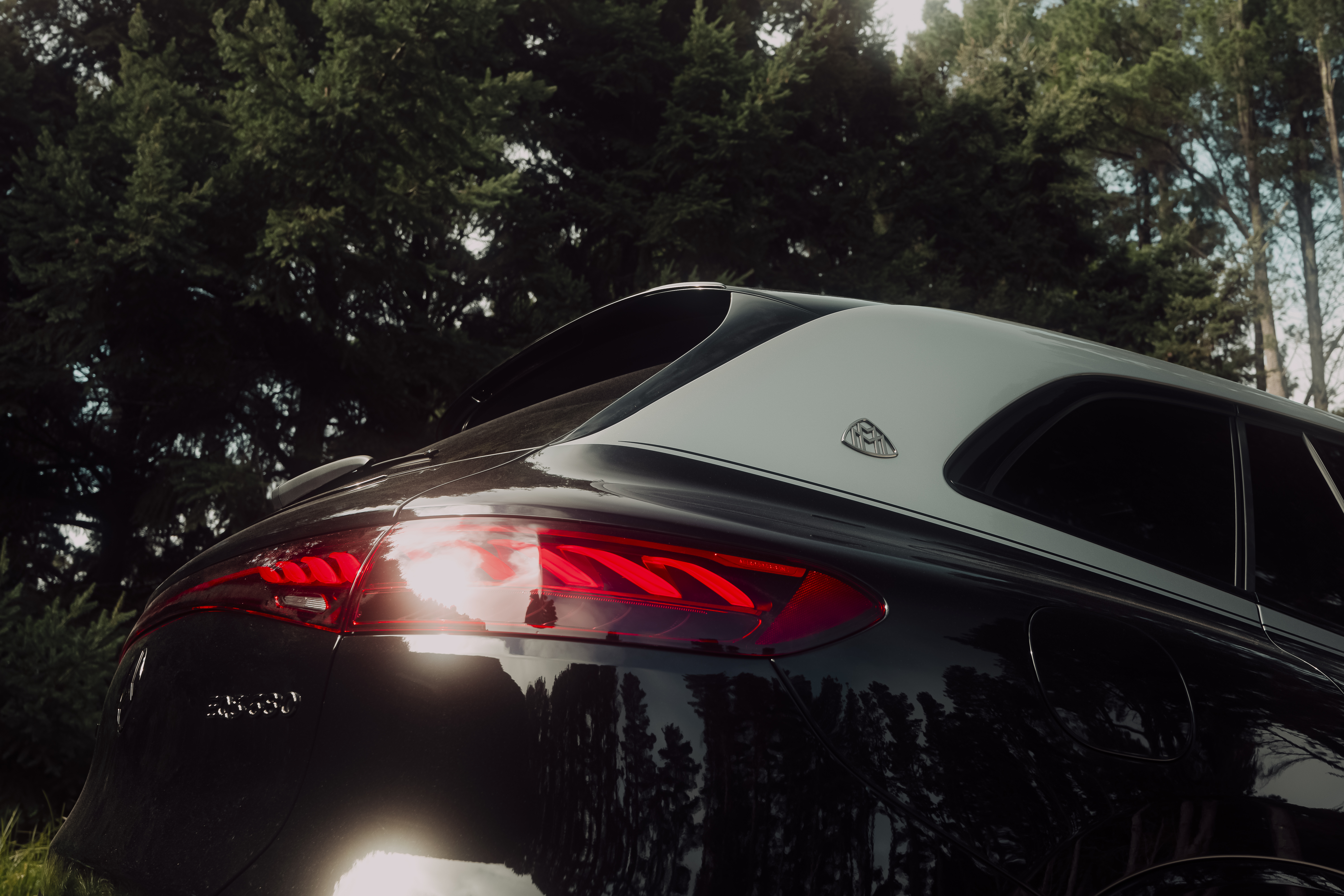
More recently, Mercedes-Maybach has taken a major step into the future with the launch of the all new Mercedes-Maybach EQS SUV, an elegant, luxuriously appointed vehicle that brings together the finest Maybach traditions with all-electric technology.


The brand’s long history of exclusive, superb design is fully realised in this model. Maybach-only details such as the signature grille, standup hood star, and logo-mesh grilles in the front apron instantly set it apart from anything else on the road. Polished chrome accents on the door pillars and a bladelike lower side trim enhance the elegant aesthetic, and are set against statement, Maybach-exclusive 21-inch wheels.


“The Mercedes-Maybach EQS SUV is a milestone in our brand history. For us, it embodies nothing less than the redefinition of automotive excellence in the age of electromobility,” says Daniel Lescow, head of Mercedes-Maybach, Mercedes-Benz Group AG.


“Our customers can look forward to an absolutely top-class electric driving experience – with the aura of the extraordinary that is typical of Maybach.”


Wilhelm and Karl Maybach laid the foundations for an elite, technically excellent and ever-innovative automotive brand – and more than a century on, that story remains at the heart of the celebrated name.

More from the Mercedes-Benz Magazine.