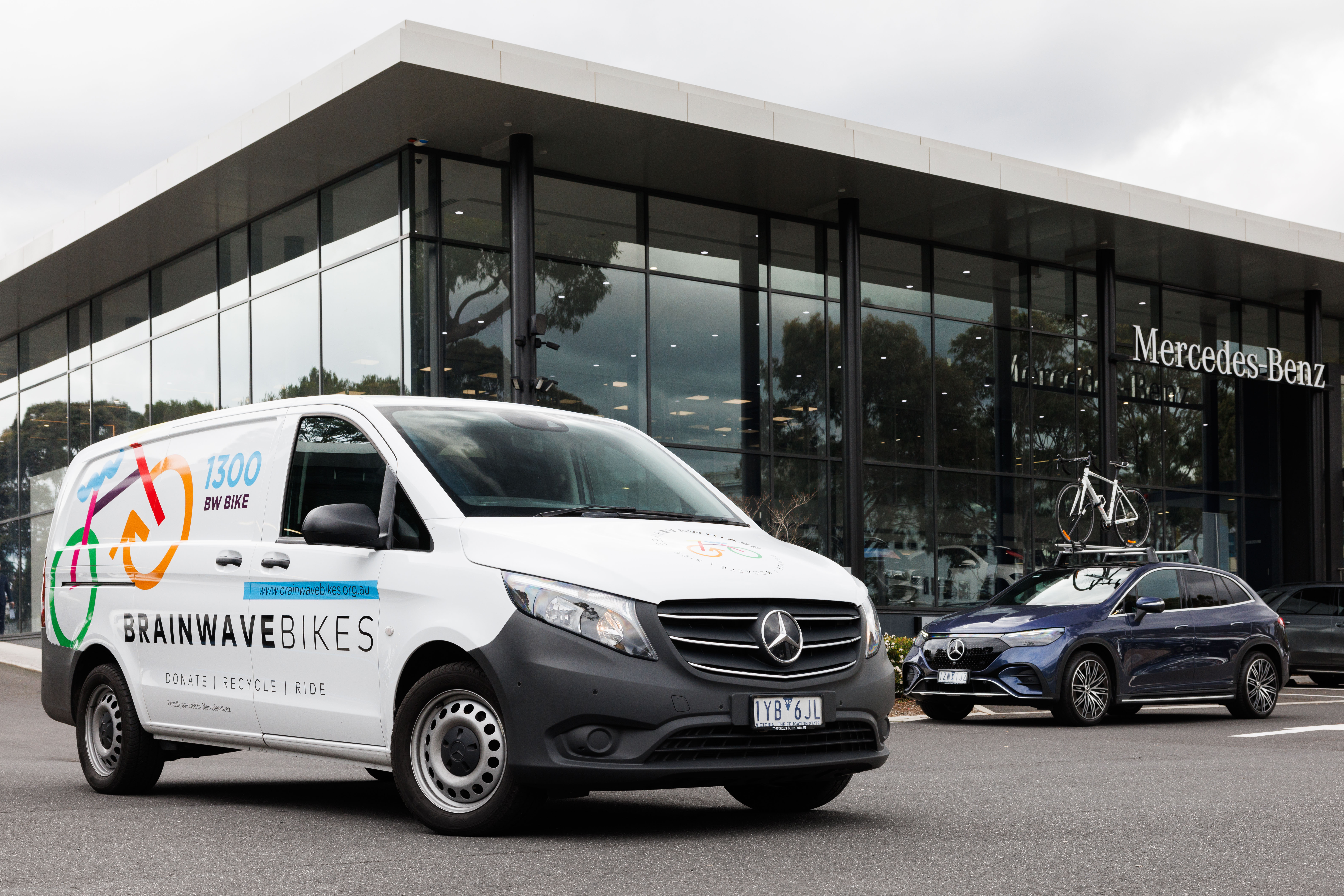
It might look like an ordinary bike shop, but the Brainwave Bikes superstore in Dingley, Melbourne is part of a much larger social enterprise. 


“One thing the customers say when they walk in is how surprised they are about the quality. Some people have thought it’s just a regular bike shop, but the price is a third to a quarter of a new product,” says Brainwave Australia’s chief executive Paul Bird. 


Brainwave Bikes, a not-for-profit second-hand bike retailer proudly supported by Mercedes-Benz Australia as the Principal Partner, is on a mission to recycle unwanted bikes and prevent them from entering landfill. They also help young people with disabilities gain employment while raising money for national charity Brainwave Australia.


“I’ve seen the power of engaging unemployed, welfare-reliant young people in a real work environment with a professional team as role models. Rather than another program they have to do, they are treated as workers from day one and they gain confidence in being able to work,” Paul says.


Rebuilding bikes – and confidence


Established in 1994, Brainwave Australia is dedicated to helping children with brain injuries and illnesses. In Australia, as many as 10 children are diagnosed with neurological conditions such as cerebral palsy, epilepsy, strokes and brain tumours every day. Brainwave Australia offers valuable resources, financial assistance and support to these children and their families to enable them to cope, adapt and thrive.


After witnessing the challenges these young people faced when looking for employment – with unemployment rates for young people with a disability being nearly three times that of others – they launched Brainwave Bikes in 2022. The initiative teaches these young people to refurbish bikes and supports them through work experience, accredited training, and the development of skills that will help them transition into mainstream employment over six to 12 months.

“I’ve seen the power of getting young people involved in things with their hands – and the confidence it gives them,” says Paul.

“We know that employment boosts their sense of belonging, self-esteem, purpose, financial empowerment and relationship-building… I don’t think there’s any better intervention, to be honest.”

A circular economy


Each year in Australia, around 300,000 bikes end up in landfill. But in just two short years, Brainwave Bikes has recycled over 6000 bikes and kept more than 78 tonnes of waste out of landfill.  


“Like everything now in the circular economy, these bikes need another life,” Paul says. “The challenge for us is to get people to see them not as waste, just to be thrown out, but they can be upcycled for another life so somebody else can have enjoyment out of it.”


Brainwave Bikes accepts all bikes, big and small, regardless of their condition. “We get money back from the steel, and we take all the parts we could use in future repairs and refurbishments,” he explains.


Brainwave Bikes’ commitment to recycling aligns with our own efforts to increase the use of secondary raw materials in our vehicles and advance the circular economy. 


“Coming from an organisation that is focused each day on driving sustainability and transformation within our business, we recognise the effort of Brainwave Bikes as an amazing achievement,” says Jaime Cohen, Managing Director of Mercedes-Benz Cars (Australia) and CEO of Mercedes-Benz Australia/Pacific.

Mercedes-Benz Australia provides hands-on help to the organisation, including select Mercedes-Benz retailers operating as collection points for used bike donations in Victoria.  


“It wouldn’t have happened without Mercedes-Benz as that initial investor,” Paul says. “Their marketing team has provided significant support, boosting our coverage and outreach – especially since we only have a part-time marketing person.


“They’ve also been involved in fundraising efforts to support the cost of a mechanic for the trainees and helped us analyse our financials and work towards greater financial sustainability.”

Pedalling towards change


While Paul is proud of what Brainwave Bikes has achieved in its first two years, he says the mission is far from over.


Last year the enterprise broke even – now, Paul’s goal is to turn a profit and reduce their reliance on trusts and fundraising for the cost of training and support. 


“The more profit, the more trainees we can get on board,” Paul says. 


He also hopes Brainwave Bikes can change attitudes about how people handle unwanted items, and how they view the abilities of people with disabilities. 


“We want employers and the community to recognise these young people can be loyal, hardworking, competent employees.”


Have you got an old bike that you no longer use? Find your nearest drop-off point.

More from the Mercedes-Benz Magazine.