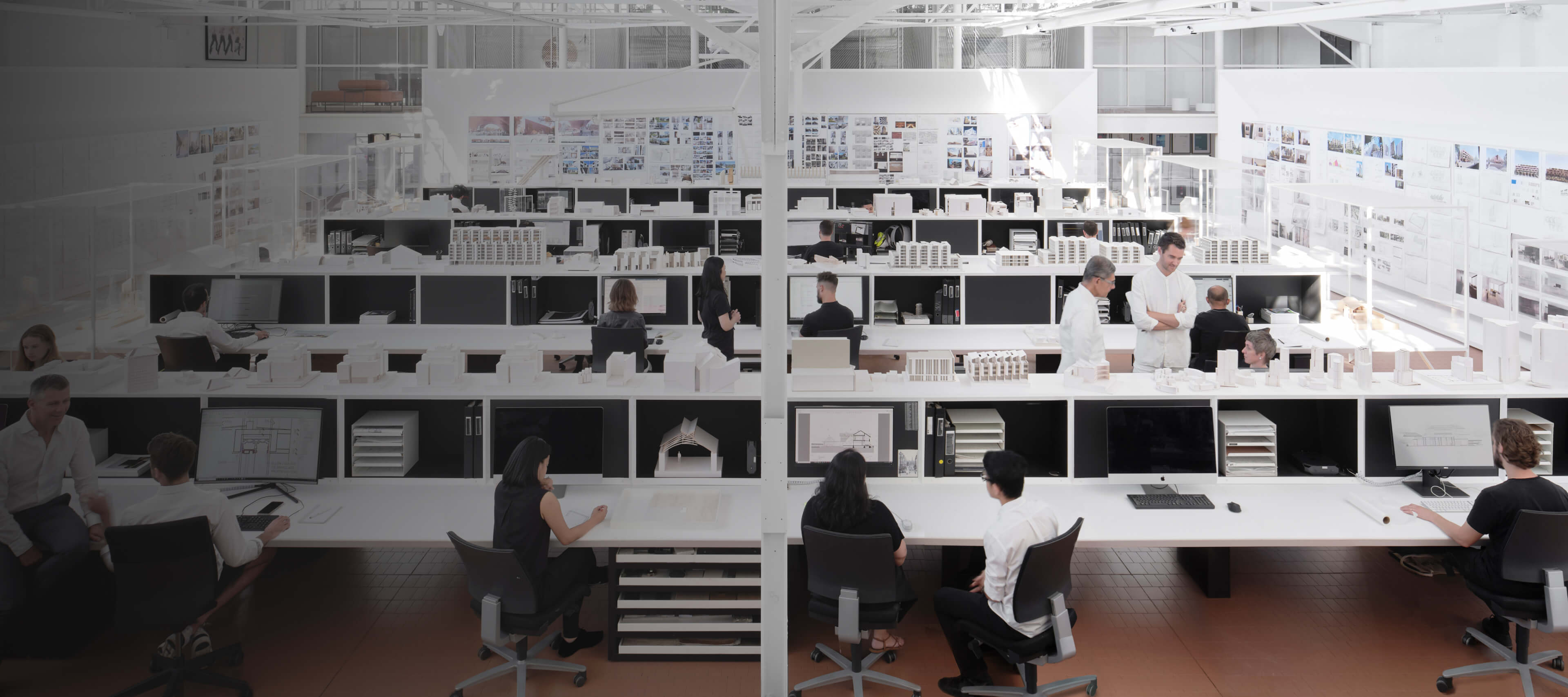
;Resize=(828,736) "Smart Design Studio offices")
The building and construction sector is responsible for almost 40 per cent of global carbon emissions, according to a 2021 report from the Clean Energy Finance Corporation. Decarbonising the design and construction process offers a clear-cut path to reducing emissions. But what can be done beyond adding solar panels and green walls to our homes and offices?
From embracing low-carbon building materials to tapping into real-time weather data, architects in Australia and New Zealand are finding innovative ways to minimise the environmental footprint of our built environment.
Adopting automation
Based in Sydney’s North Alexandria Industrial Heritage Conservation Area, Smart Design Studio certainly lives up to its name. The multidisciplinary design practice occupies an energy-positive building that uses technology to drive a sustainable approach to its day-to-day operations.
With no air conditioning, the building harnesses passive solar design, natural ventilation and automation to remain cool in summer. It also drastically reduces its reliance on electricity from the grid thanks to 260 solar photovoltaic panels and battery storage.
Automation plays an important role in the building’s temperature management system, controlling the fans, blinds, windows, lighting and underfloor heating and cooling.
“The weather station on our roof, which also monitors the weather bureau’s forecast, ensures that the rain, wind and hot or cold air does not come into the studio,” explains William Smart, founder and creative director of Smart Design Studio.