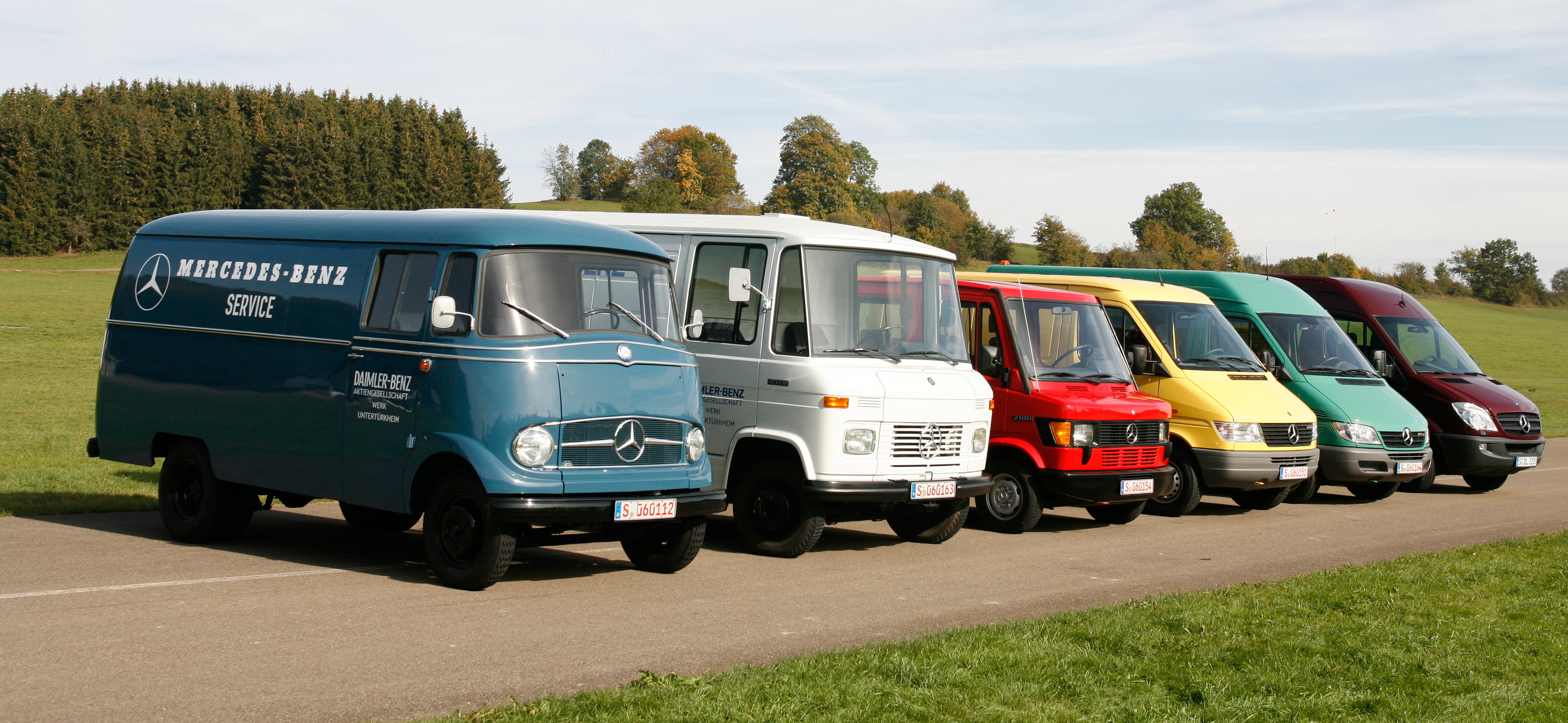
In 1896, Carl Benz introduced the “Combination Delivery Vehicle”, creating an entirely new way to transport goods. Around the same time, Gottlieb Daimler was developing commercial vehicles of his own. Together, their pioneering work laid the foundations for a category that would become essential to businesses and communities around the world. More than a century later, that pioneering spirit continues. From compact vans built for the city to large-capacity vehicles engineered for demanding workloads, and from diesel power to all-electric mobility, Mercedes-Benz Vans continues to evolve around the people and businesses that depend on them. This is the story of 130 years on the road and an ambition that has never changed, to keep moving business forward.
;Resize=(828,828) "A century and more of keeping business moving.")

130 Years of Transportation.
From the first delivery vehicle to today’s connected and electric vans, Mercedes-Benz has spent 130 years redefining what a commercial vehicle can do.
The early years: 1896 - 1945.
The late 19th century was driven by a wave of industrial momentum. Cities were expanding, trade was booming and getting goods from was becoming vital. Horse-drawn carts still ruled the roads, but the first motor vehicles were starting to make an appearance. In 1896, Carl Benz introduced the world’s first delivery vehicle, sparked a shift that would change the history of logistics forever.
Rebuilding and a new start: 1945–1970.
Despite widespread factory destruction, demand for commercial transport remained high. Production resumed in 1946 with a pre-war flatbed model, setting off a remarkable period of post-war recovery.
The direct predecessors: 1970–2000.
To meet shifting global demands, Mercedes-Benz introduced passenger-car safety technology to commercial vehicles, expanding the lineup to meet the needs of growing businesses.
The Sprinter. A name that became a category.
When the Sprinter arrived in 1995, it didn't simply join the van market. It helped redefine it. Three generations later, more than five million Sprinters have been produced globally, carrying everything from tools and equipment to passengers and freight. Today, the Sprinter continues that legacy across a broad range of configurations, while the eSprinter brings the same versatility into the electric era.
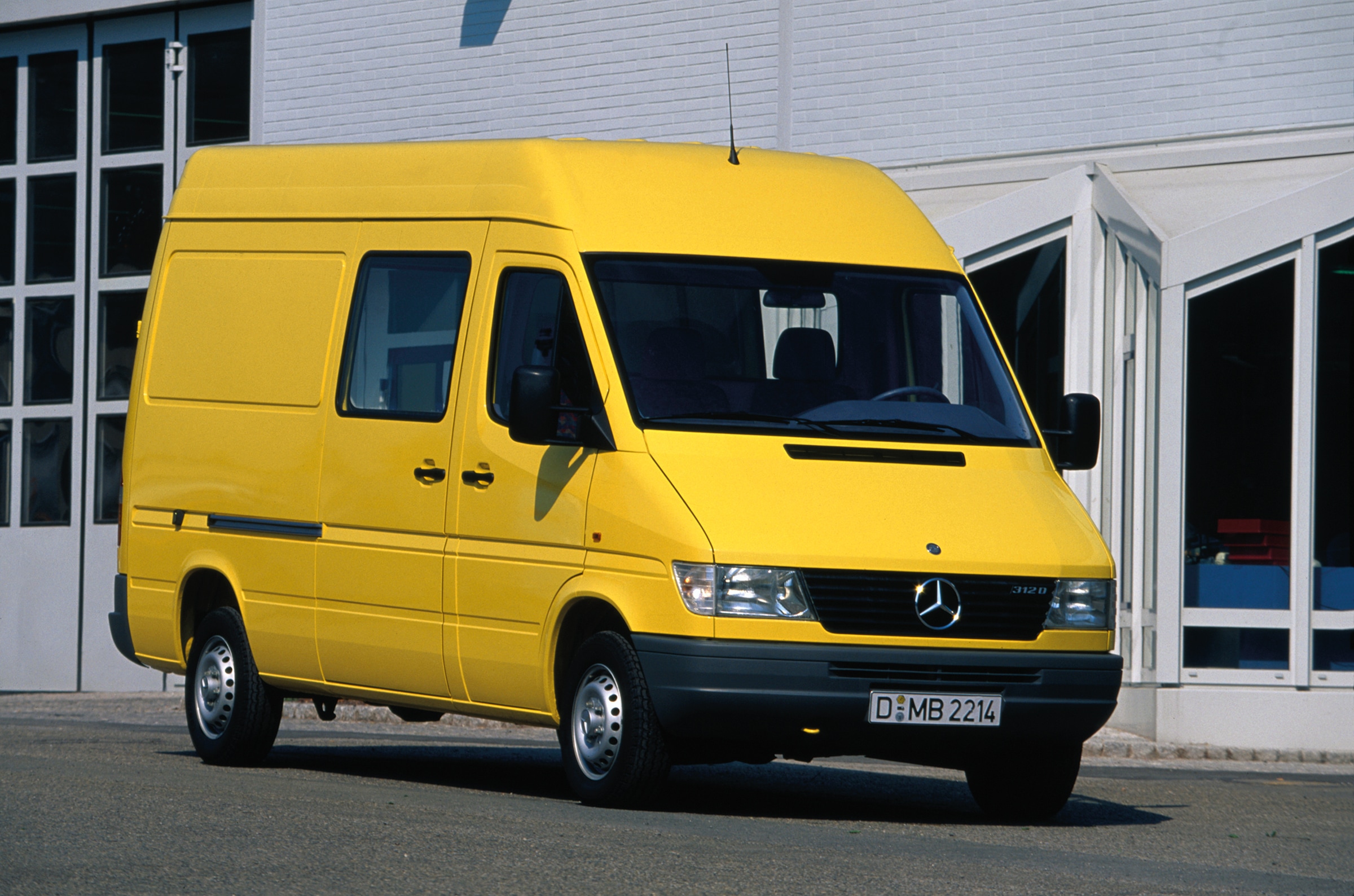
The first-generation
A new star is born: 1995–2006.
As like the first van with the star, it also carried a name rather than a number. The Sprinter combined a self-supporting body, independent front suspension and standard ABS with automatic brake differential, delivering premium levels of safety, handling and comfort. In 1995, this represented premium safety on an international level. It also introduced the first direct-injection diesel engine in a Mercedes-Benz van.
;Resize=(600,450) "The first generation of Mercedes-Benz Sprinters | Commercial Vehicles History | Mercedes-Benz")
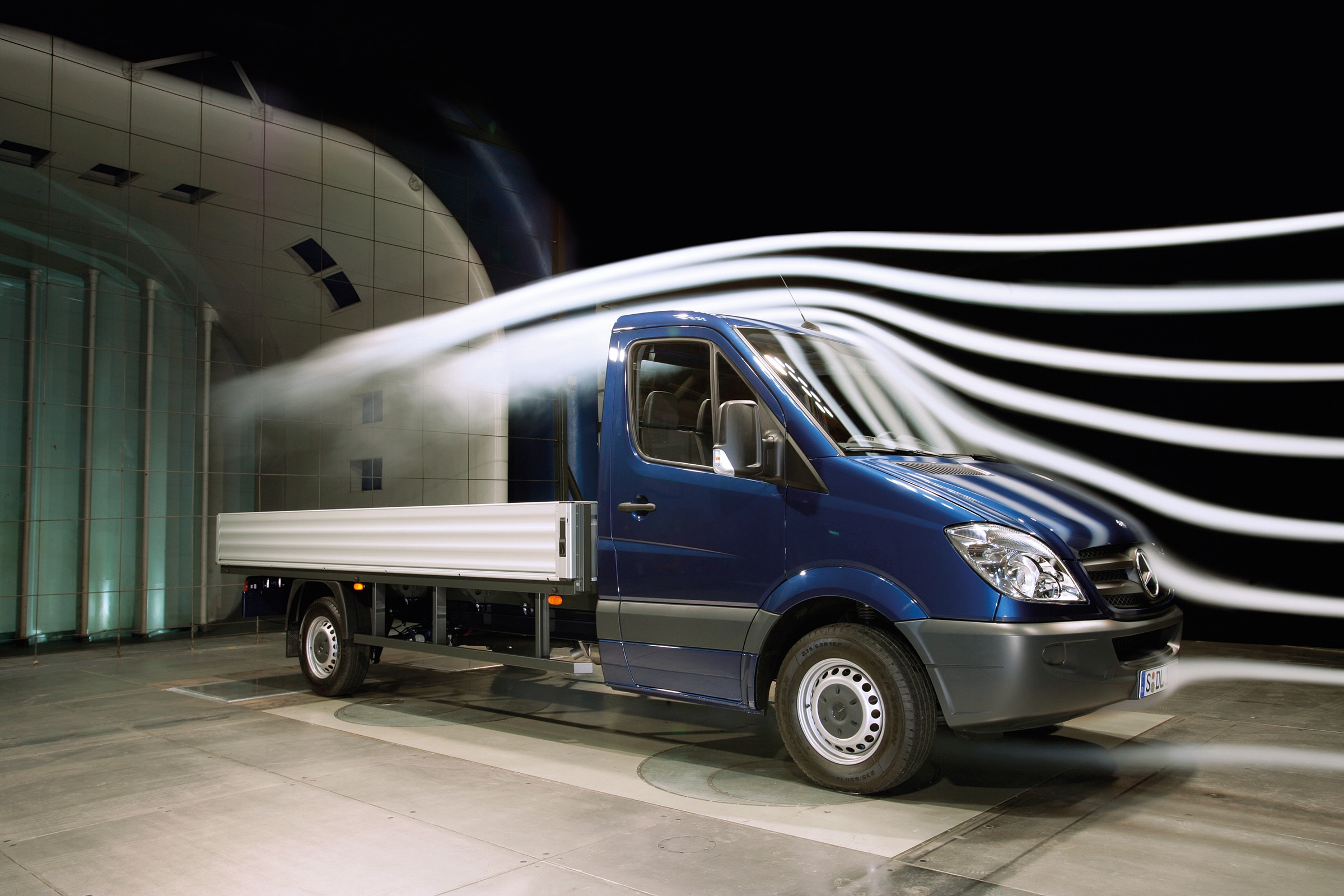
The second-generation
More space, more safety, more efficiency: 2006–2018.
More cargo volume, a fresh design and standard ESP®, the second-generation Sprinter raised the bar again. It offered 3 wheelbases, 4 lengths, 3 roof heights, and gross vehicle weights from 3 to 5 tonnes. New CDI diesel engines with BlueEFFICIENCY technology noticeably reduced fuel consumption and emissions. In 2016, the 5.5-tonne variant further expanded the range and applications.
;Resize=(600,450) "The second generation Sprinter Platform Vehicle | Commercial Vehicles History | Mercedes-Benz")
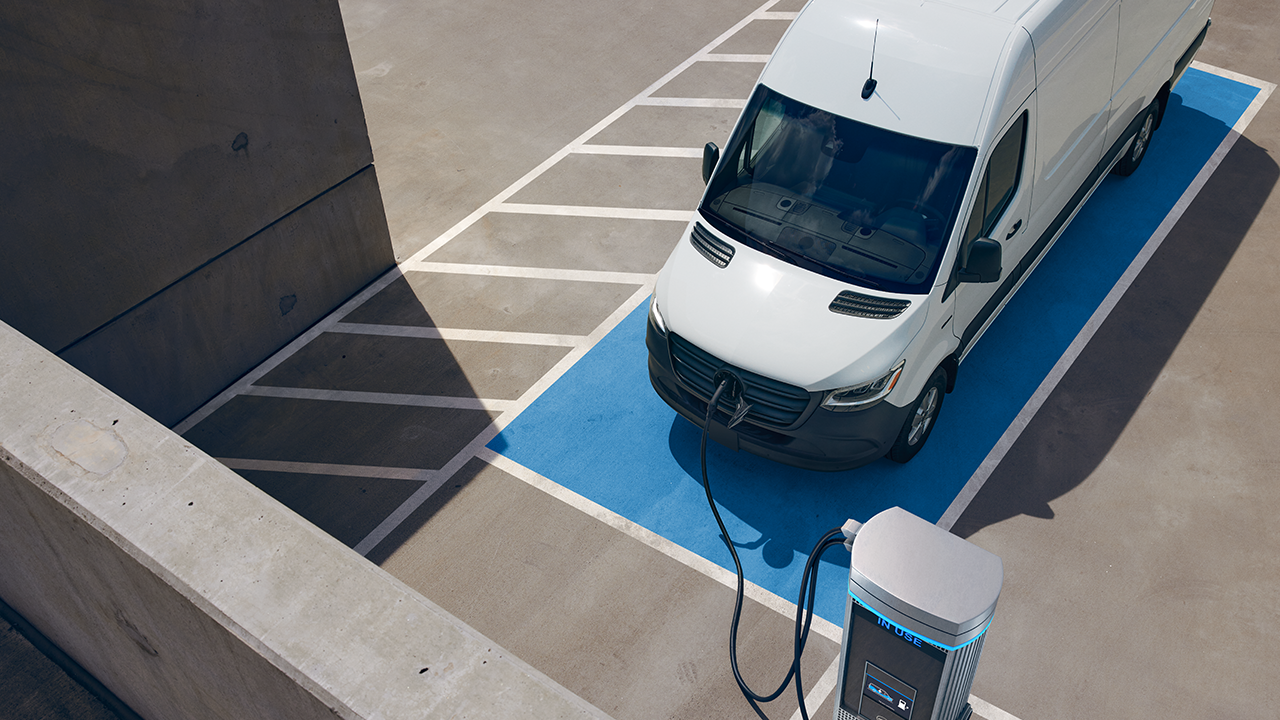
The third-generation
Connected, electric, always in view: From 2018.
The third-generation Sprinter arrived with a smoother design, aerodynamically optimised grille and a major leap in connectivity. It became the first Mercedes-Benz van equipped with the MBUX multimedia system, including “Hey Mercedes” voice control. Front-wheel drive was introduced as a new option, alongside Active Distance Assist DISTRONIC and a broad engine range up to 140 kW. The eSprinter followed in 2020, with its second generation arriving in 2023 and offering up to 359 kilometres of tested range (WLTP), depending on battery size.
;Resize=(600,450) "The second generation eSprinter Panel Van | Commercial Vehicles History | Mercedes-Benz")
Vito. An all-rounder with the star.
Since 1995, the Vito has combined commercial capability with a level of comfort and refinement more commonly associated with passenger vehicles. Across three generations, it has evolved to meet the changing needs of businesses and customers, from cargo and crew transport to passenger-focused applications. Today, the Vito is joined by the all-electric eVito, giving businesses more choice in how they move through the working day.
The first-generation
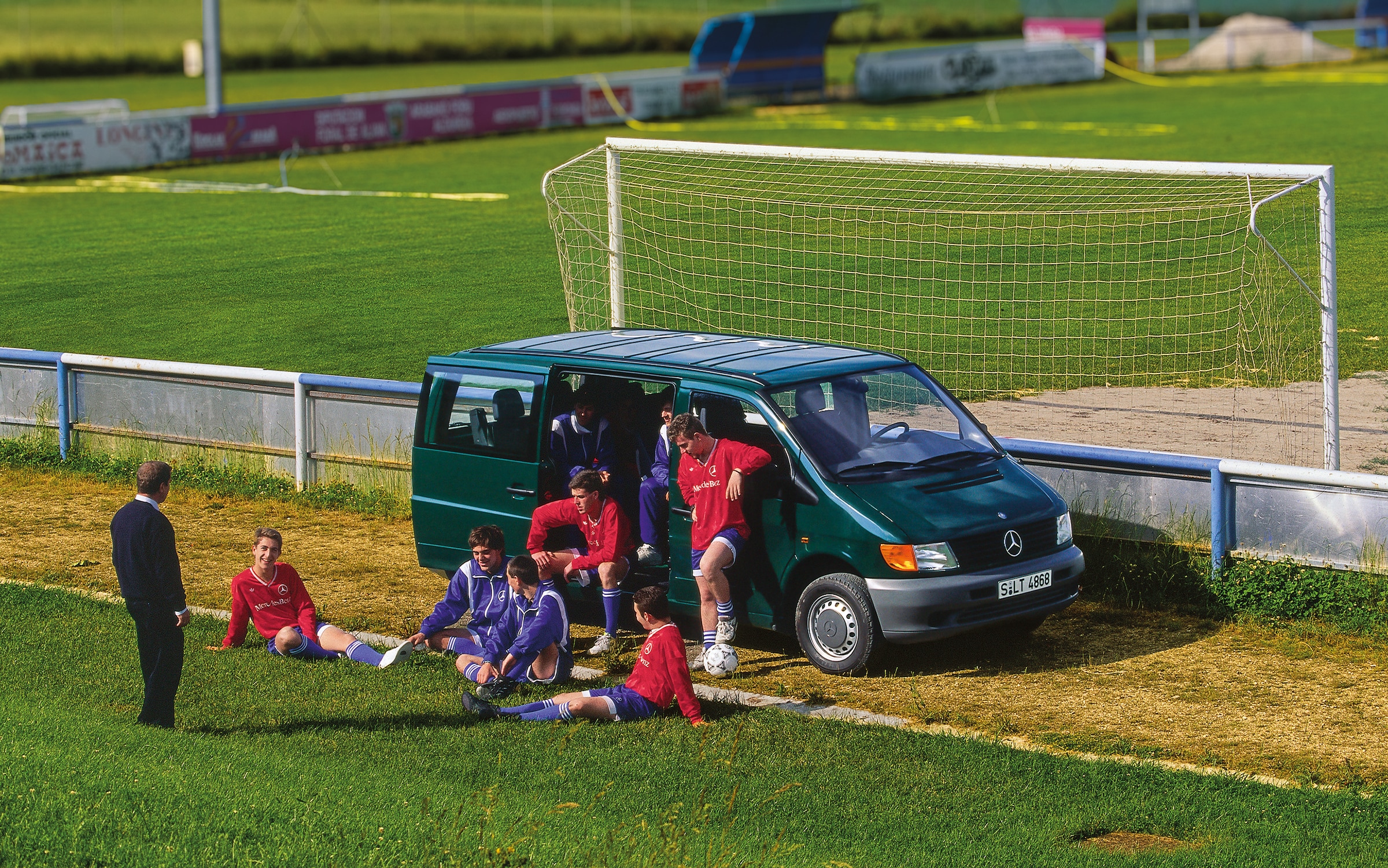
Front-wheel drive, passenger-car feel, new segment: 1995–2003.
The 1995 Vito was Mercedes-Benz’s first midsize van designed consistently for passenger-car comfort. Standard disc brakes, ABS and driver airbags brought safety to a similar standard. At just 1.89 metres tall, it could fit into almost any parking garage. In 1996, the V-Class followed as an upscale variant, featuring standard air suspension and individually adjustable or removable rear seats. That same year, the Marco Polo debuted as a compact leisure vehicle.
;Resize=(600,450) "The first generation of Mercedes-Benz Vitos | Commercial Vehicles History | Mercedes-Benz")
The second-generation.
More variety, more character, and the Viano: 2003–2014.
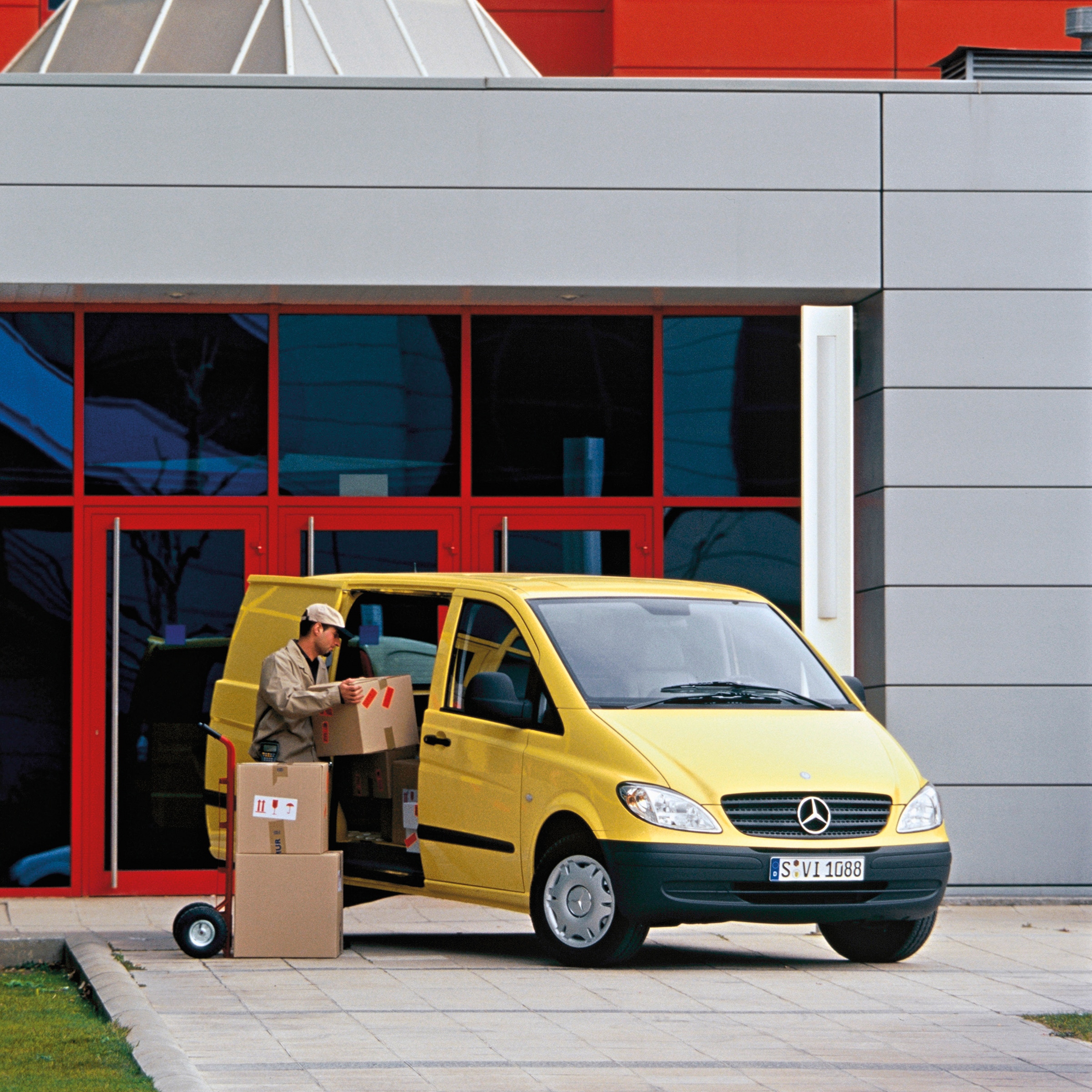
In 2003, the Vito debuted an all-new design, switching to rear-wheel drive and introducing the segment’s first all-wheel-drive variant. With 3 body lengths, 2 roof heights and engines up to a V6, it offered greater versatility. Alongside it, the Viano provided an upscale option with improved sound insulation, premium interior materials and a focus on families and shuttle services. In 2010, a facelift introduced further updates, while the battery-electric Vito E-CELL offered an early preview of the segment’s electrification.
;Resize=(600,450) "The second generation of Mercedes-Benz Vitos | Commercial Vehicles History | Mercedes-Benz")
The third-generation.
An all-rounder with ambition: From 2014.
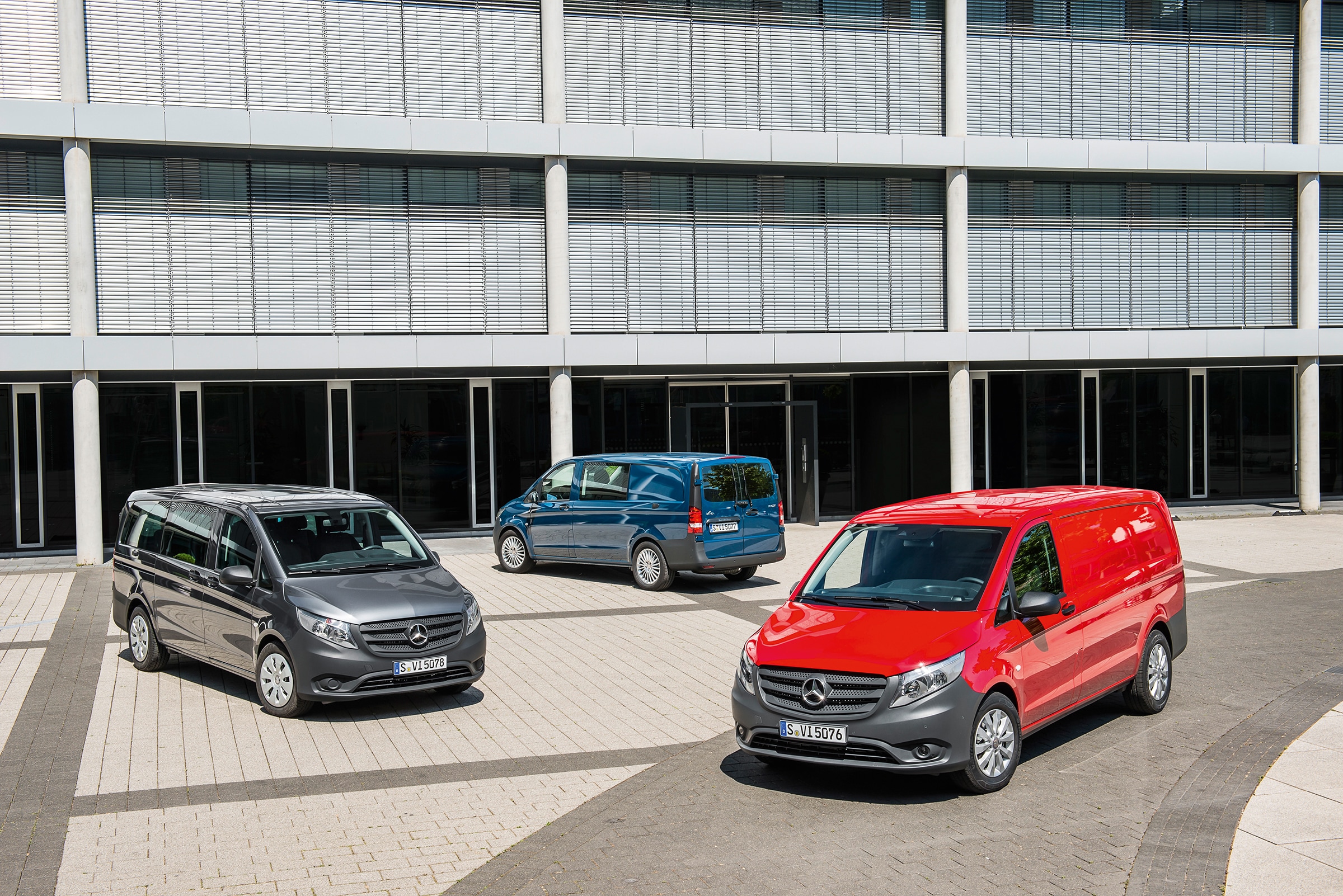
In 2014, the third-generation Vito celebrated its world premiere, larger, safer and more versatile. With an unchanged wheelbase, the 447 series grew by up to 130 millimetres, providing more space for cargo and passengers. Unique in its class, the Vito and V-Class came standard with front airbags, a seat-belt warning system and Crosswind Assist, even in base specification. In 2020, a comprehensive update introduced the OM654 diesel engine family, DISTRONIC and AIRMATIC air suspension.
;Resize=(600,449) "The third generation of Mercedes-Benz Vitos | Commercial Vehicles History | Mercedes-Benz")
The eVito & EQV.
Electric, quiet, everyday-ready.
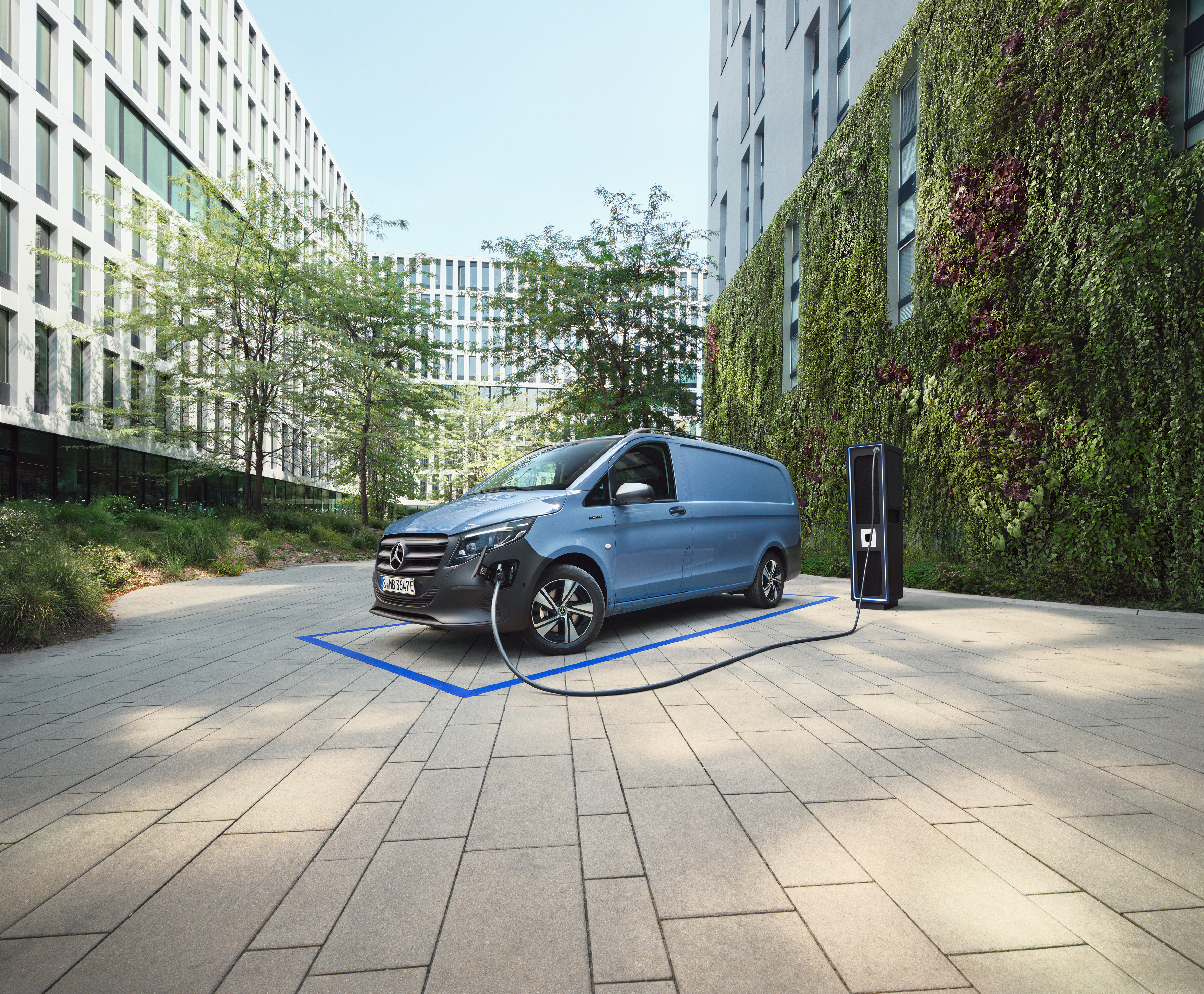
With the eVito, Mercedes-Benz brought electromobility to everyday van operations in 2018. Silent in city traffic, the eVito showed that electric drive and commercial practicality are not mutually exclusive. In 2020, the EQV followed as an all-electric V-Class for passenger transport. Both represent the consistent step from research to series production.
;Resize=(600,450) "Mercedes-Benz electric van lineup | Commercial Vehicles History | Mercedes-Benz")
The V-Class.
Versatility meets refinement.
The story of Mercedes-Benz Vans extends well beyond commercial transport. Since the introduction of the V-Class in 1996, Mercedes-Benz has brought the versatility of its van architecture together with elevated levels of comfort, refinement and passenger-focused design. Today, the V-Class continues to offer spacious, sophisticated mobility for families, businesses and passenger transport alike.
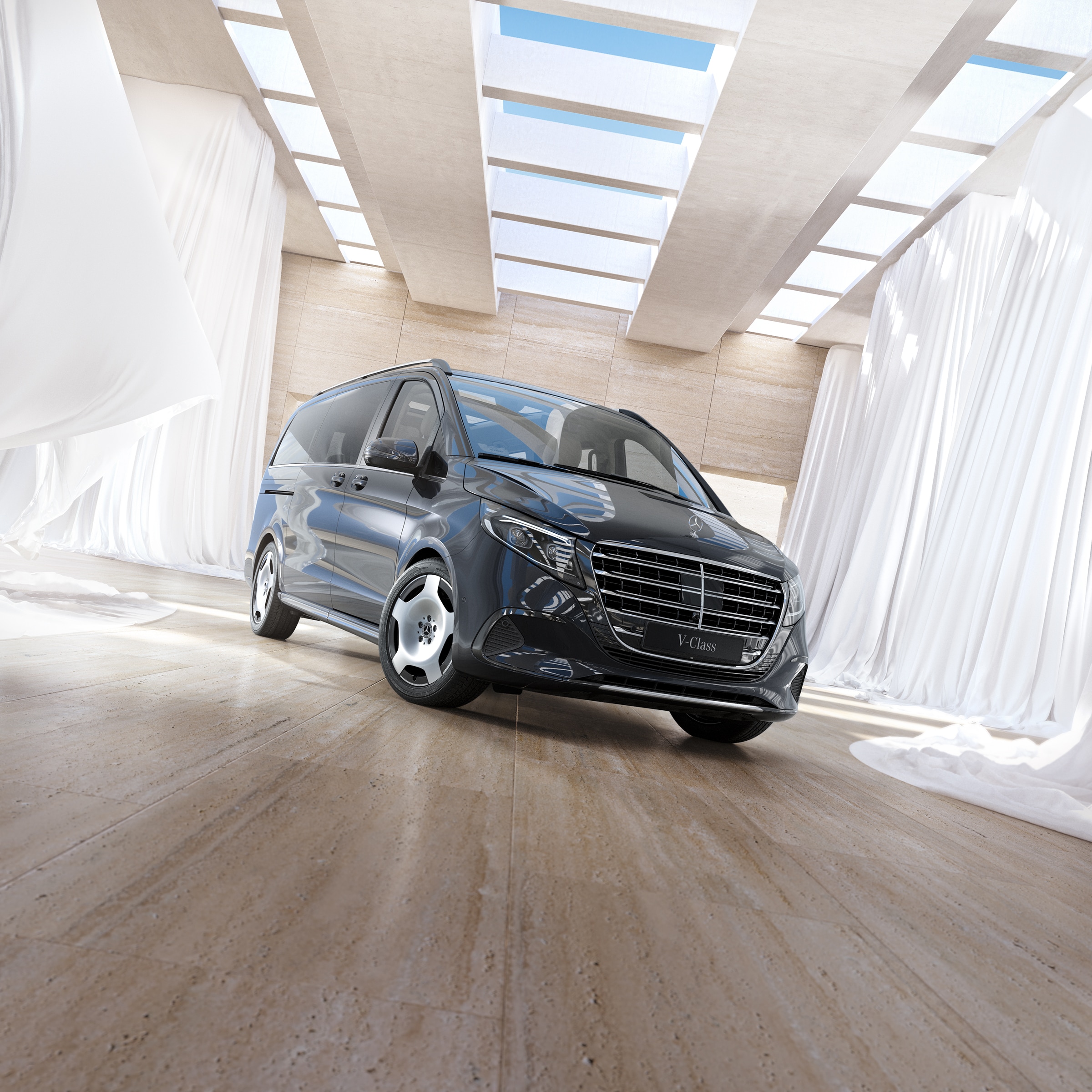;Resize=(600,450) "V-Class | Commercial Vehicles History | Mercedes-Benz")
The next 130 years starts here.
The question that has driven Mercedes-Benz Vans for 130 years remains as relevant as ever, what should a van be capable of tomorrow? The answer is already beginning to take shape. The new Van Architecture provides the foundation for the next generation of Mercedes-Benz vans, with electric and conventional powertrains, advanced connectivity and a design philosophy centred around the needs of those who use them. It is a new chapter built on a long-standing idea, that innovation should make work, travel and everyday life better.
130 years on, the journey continues.
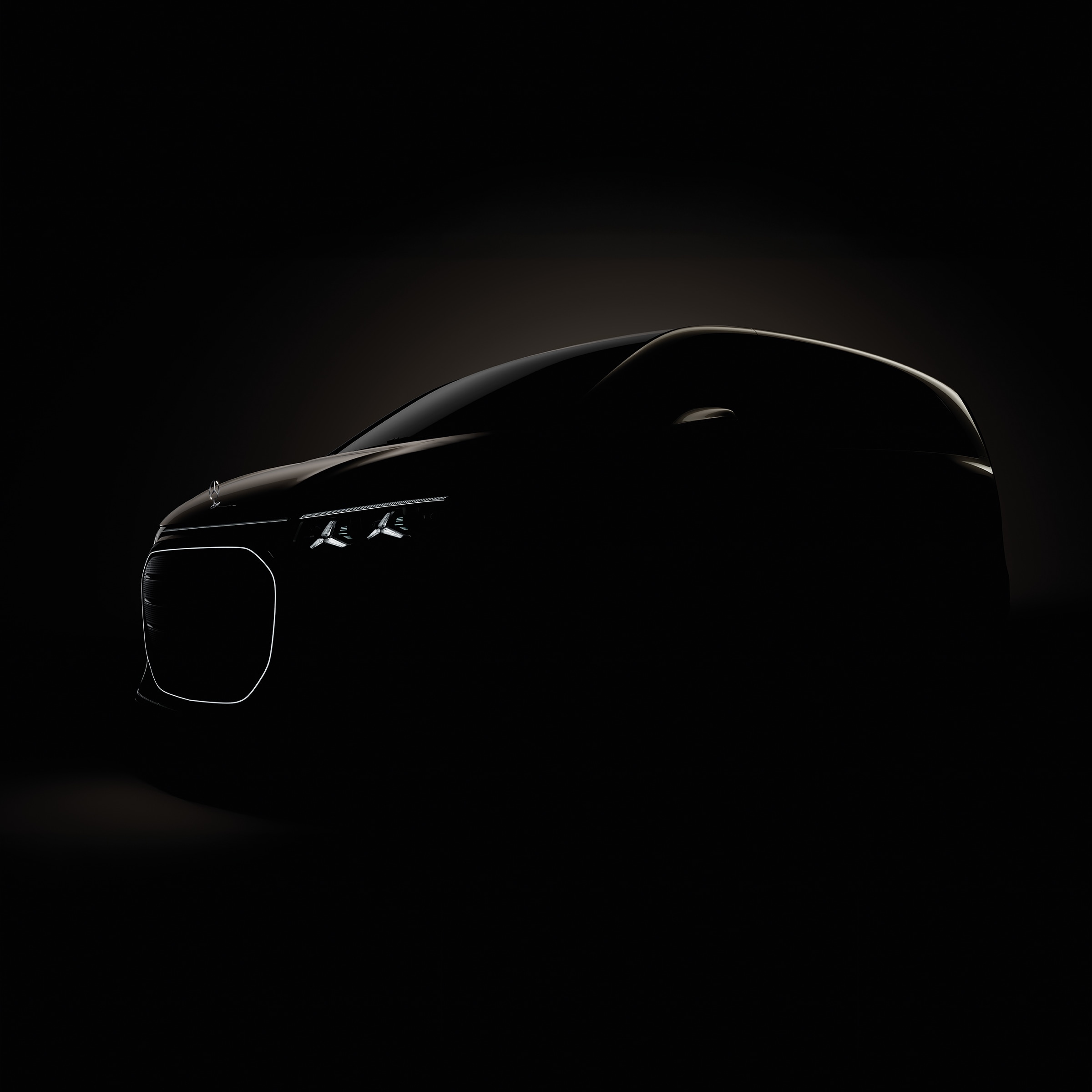;Resize=(600,450) "The all new VLE | Commercial Vehicles History | Mercedes-Benz")
A legacy of backing business for 130 years.
Since building the world's first work van in 1896, we've been solving business needs through innovation and hard work. That's why we've been able to set class-leading standards in efficiency, durability, and safety for over a century. During those 130 years of experience, we learned that dependability isn't a luxury, it's a requirement. And it comes standard in every van we've ever made. Explore our heritage.
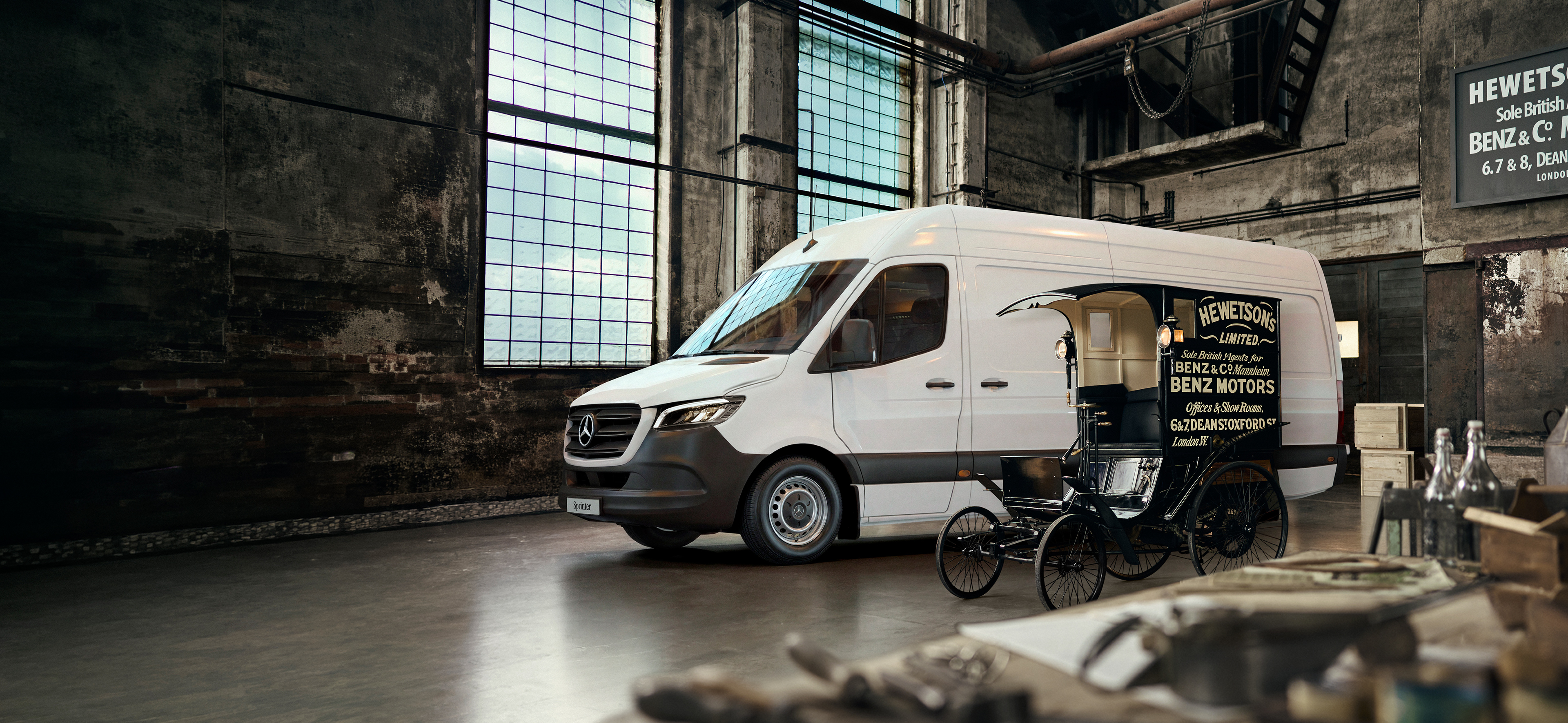;Resize=(828,828) "History of Mercedes-Benz Vans")
130 Years of moving business forward.
From the first delivery vehicle to today’s connected and electric vans, Mercedes-Benz has spent 130 years redefining what a commercial vehicle can do.