This year, Mercedes-Benz Vans globally is celebrating a milestone that few vehicles achieve: the iconic Sprinter is turning 30. Since its launch in Europe in 1995, the Sprinter hasn’t just been a van, it’s been a trailblazer, a workhorse, and a partner to businesses, adventurers and dreamers alike.
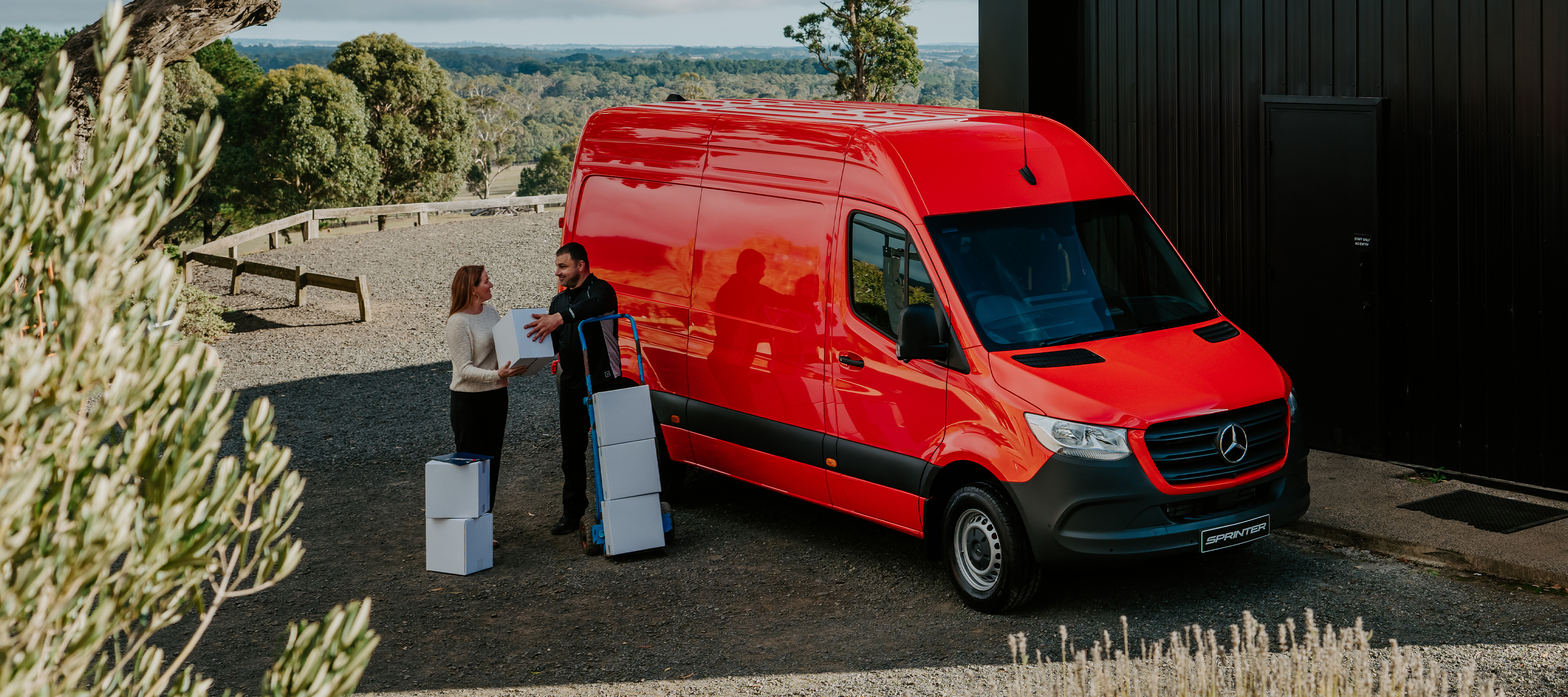;Resize=(828,828) "Man delivering some boxes to a woman")

Celebrating 30 Years of the Van That Changed Everything.
Join us as we celebrate 30 years of progress, versatility, and stories behind the van that redefined its category.
The Van That Changed Everything
When the Sprinter first rolled off production lines in 1995, it rewrote the rulebook. It was our very first van with a name, rather than a combination of letters and numbers. That small change spoke volumes about its ambitions. Beneath its stylish badge was serious engineering: a self-supporting body, rear-wheel drive, independent front suspension and powerful drivetrains that set new standards for comfort and performance.
And safety? Even then, the Sprinter was ahead of its time. Disc brakes all round, an anti-lock braking system, seat belts integrated into seats, optional driver airbags – and those were just the highlights. Throughout the late 1990s and early 2000s, the Sprinter continually raised the bar, introducing front passenger airbags, electronic stability control, and more.
And safety? Even then, the Sprinter was ahead of its time. Disc brakes all round, an anti-lock braking system, seat belts integrated into seats, optional driver airbags – and those were just the highlights. Throughout the late 1990s and early 2000s, the Sprinter continually raised the bar, introducing front passenger airbags, electronic stability control, and more.
Advancing Safety and Comfort
By 2006, the second-generation Sprinter had expanded its horizons. Available in more sizes and body types than ever before, from short-wheelbase panel vans to long-wheelbase crew cabs, the Sprinter could be ordered to the customers unique specifications. The 2009 introduction of BlueEFFICIENCY engines and automatic start-stop systems made it more efficient too , paving the way for our current-day diesel engines.
And let’s not forget the technology. Crosswind Assist, introduced in 2013, made motorway driving safer in harsher conditions. Electronic Stability Program (ESP) also became standard, a system that detects and reduces skidding by automatically braking individual wheels, helping drivers stay in control during sudden manoeuvres or on slippery roads. Every innovation was crafted to make the van easier to live with, and safer for everyone on the road.
And let’s not forget the technology. Crosswind Assist, introduced in 2013, made motorway driving safer in harsher conditions. Electronic Stability Program (ESP) also became standard, a system that detects and reduces skidding by automatically braking individual wheels, helping drivers stay in control during sudden manoeuvres or on slippery roads. Every innovation was crafted to make the van easier to live with, and safer for everyone on the road.
Redefining Connectivity and Versatility
With the third-generation Sprinter in 2018, the van took a leap into the digital age. MBUX multimedia systems brought intuitive voice control to commercial vans for the first time. That same model introduced front-wheel drive options, making the Sprinter accessible to even more drivers and industries.
And then came the eSprinter in 2024. Fully electric and emissions-free at the tailpipe, this was a Sprinter for a changing world, one that could keep urban deliveries efficient and quiet.
And then came the eSprinter in 2024. Fully electric and emissions-free at the tailpipe, this was a Sprinter for a changing world, one that could keep urban deliveries efficient and quiet.
Ready for the Future
The latest eSprinter offers a tested electric range of up to 359km*, a flexible modular design, and practical features that make work easier, like an optional built-in power supply for tools and equipment. It’s built to handle every challenge.
Driver assistance systems continue to evolve as well. For example, Active Lane Keeping Assist helps prevent unintended lane departures by gently steering the vehicle back into its lane and alerting the driver via the steering wheel if drifting occurs, enhancing safety and reducing driver fatigue.
Other technologies, such as Active Brake Assist, have also been enhanced to better respond to surrounding traffic, helping you stay safer on busy roads.
Join the Celebration
After three decades, the Sprinter’s legacy isn’t just measured in horsepower and payloads. It’s measured in all the businesses it’s supported, all the road trips it’s powered, and all the memories its owners have created.
Here’s to the next chapter, we can’t wait to see where you’ll go.
Learn more about our 30-year celebrations here.
Words by Lari Smith
*Actual driving range may vary depending on factors such as fitted accessories, vehicle specifications, battery age and condition, climate and ambient temperature, driving style, use of heating/cooling functionality, traffic conditions and vehicle load.