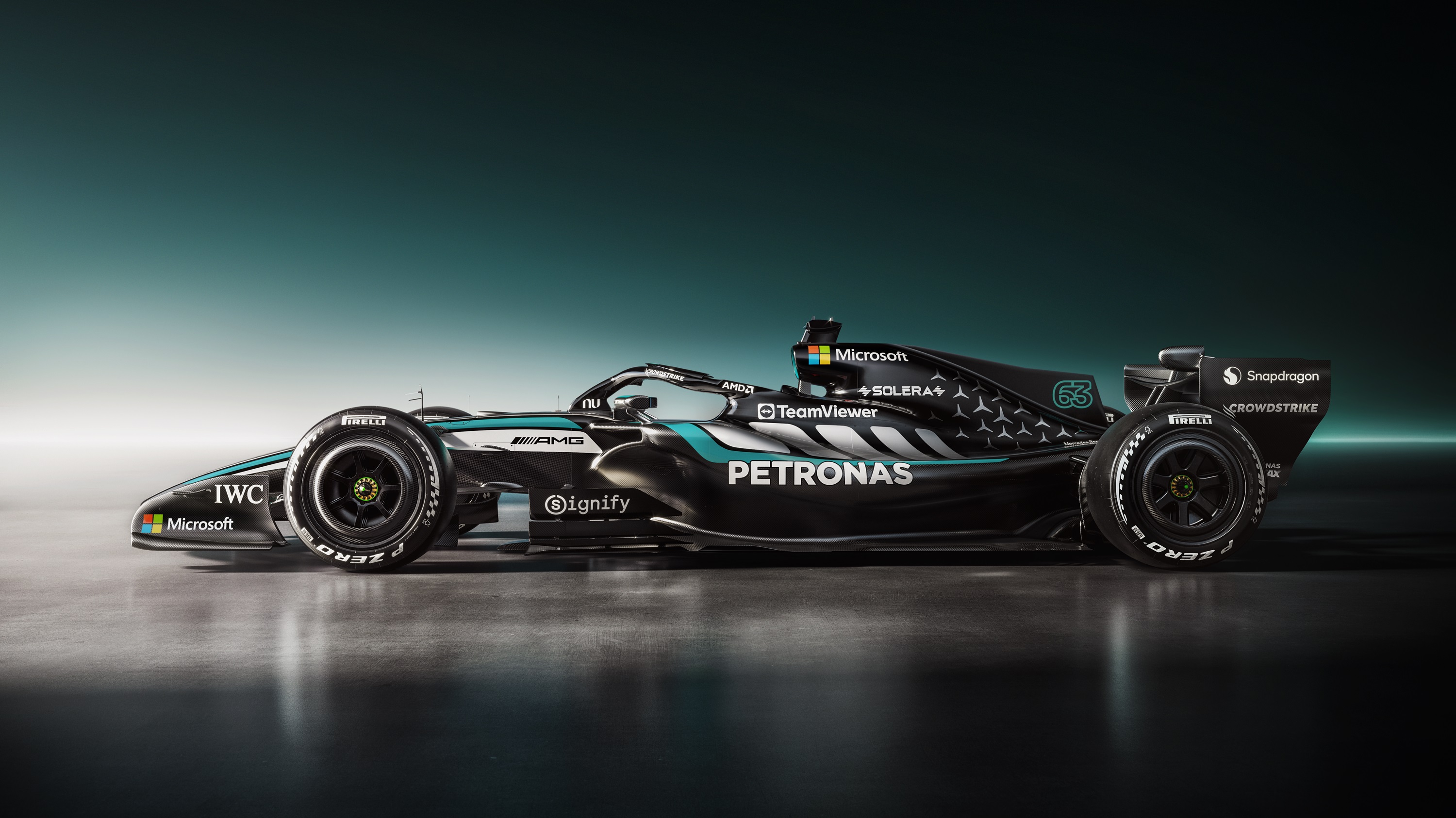
;Resize=(828,827) "The new Mercedes-AMG W17")
Formula 1® has never stood still. Since its earliest days, the sport has been defined by constant technical evolution, with engineers chasing marginal gains that can reshape the sport entirely.
As the category prepares for another major reset in the 2026 season, it’s the perfect moment to look back at some of the most influential innovations in the sport’s history, while also considering how the next generation of F1® cars will build on that foundation.
What makes F1® unique is that innovation is not optional. The rulebook may, at times, slow progress – but it also creates new problems for teams to solve. The result is a championship that continually reinvents itself, pushing advances in performance, efficiency and safety that frequently influence road cars long after the chequered flag has fallen.
Here, we explore some of the most impressive breakthroughs and technological advances in modern F1® history.
The science of airflow
Aerodynamics remains one of the biggest performance differentiators in F1® tech. From complex bargeboards of the late 2010s to the ground-effect underbodies introduced in 2022, managing airflow has always been critical to lap time.
Modern F1® cars are designed to generate downforce more efficiently, allowing closer racing and reducing the dramatic loss of grip that plagued earlier eras. Venturi tunnels (sculpted channels) beneath the floor now do much of the heavy lifting, reducing reliance on fragile upper-body aero devices. This shift has delivered one of the most visible Formula 1® highlights of recent seasons: cars that, in many situations, can follow each other more closely and race wheel to wheel.
In 2026, aerodynamics will again evolve. Smaller, lighter cars with active aerodynamic elements will allow teams to balance straight-line efficiency and cornering grip in new ways. The goal is simple but ambitious: maintain performance while cutting drag and energy consumption.
Revolutionising engines in Formula 1®
Hybrid technology has transformed the engines in Formula 1® more profoundly than any change since the move from naturally aspirated to turbocharged power. Introduced in 2014, the V6 turbo-hybrid era initially drew criticism for its complexity, but it has since become one of the sport’s greatest technical achievements.
Today’s power units combine a turbocharged internal combustion engine with sophisticated energy recovery systems. The MGU-K (MGU stands for motor generator unit) harvests kinetic energy under braking, while the MGU-H captures heat energy from the turbocharger. Together, they produce well over 700kW while achieving remarkable thermal efficiency.
Recent race examples underline how central hybrid management has become. Drivers routinely deploy harvested energy strategically, defending on straights or attacking late in races. Fuel efficiency, once an afterthought, now shapes entire grand prix strategies.
In 2026, F1® engines will take another step. The MGU-H will be removed, electrical output will increase significantly, and sustainable fuels will become mandatory. The balance between electric and combustion power will shift dramatically, demanding fresh thinking from engineers and drivers alike.
A quiet revolution in energy recovery
The roots of modern hybrid systems lie in kinetic energy recovery systems (KERS), first introduced in 2009. Early systems were heavy and inconsistent, but they proved that harvesting wasted energy could deliver meaningful performance benefits.
Over time, KERS evolved into today’s fully integrated energy-recovery systems, which are lighter, more powerful and seamlessly managed by software. While fans may not always notice it, energy deployment is now one of the most decisive aspects of race craft, especially at tracks with long straights and heavy braking zones.